
Locally owned · Woman-owned · Work guaranteed in writing
Deck Repair and Building in Eden Prairie, MN
From one soft board to a full rebuild, built to stand up to Minnesota winters.
Free estimate
Tell us what you need
Three fields. Our office follows up to schedule.
What a Minnesota winter does to a deck
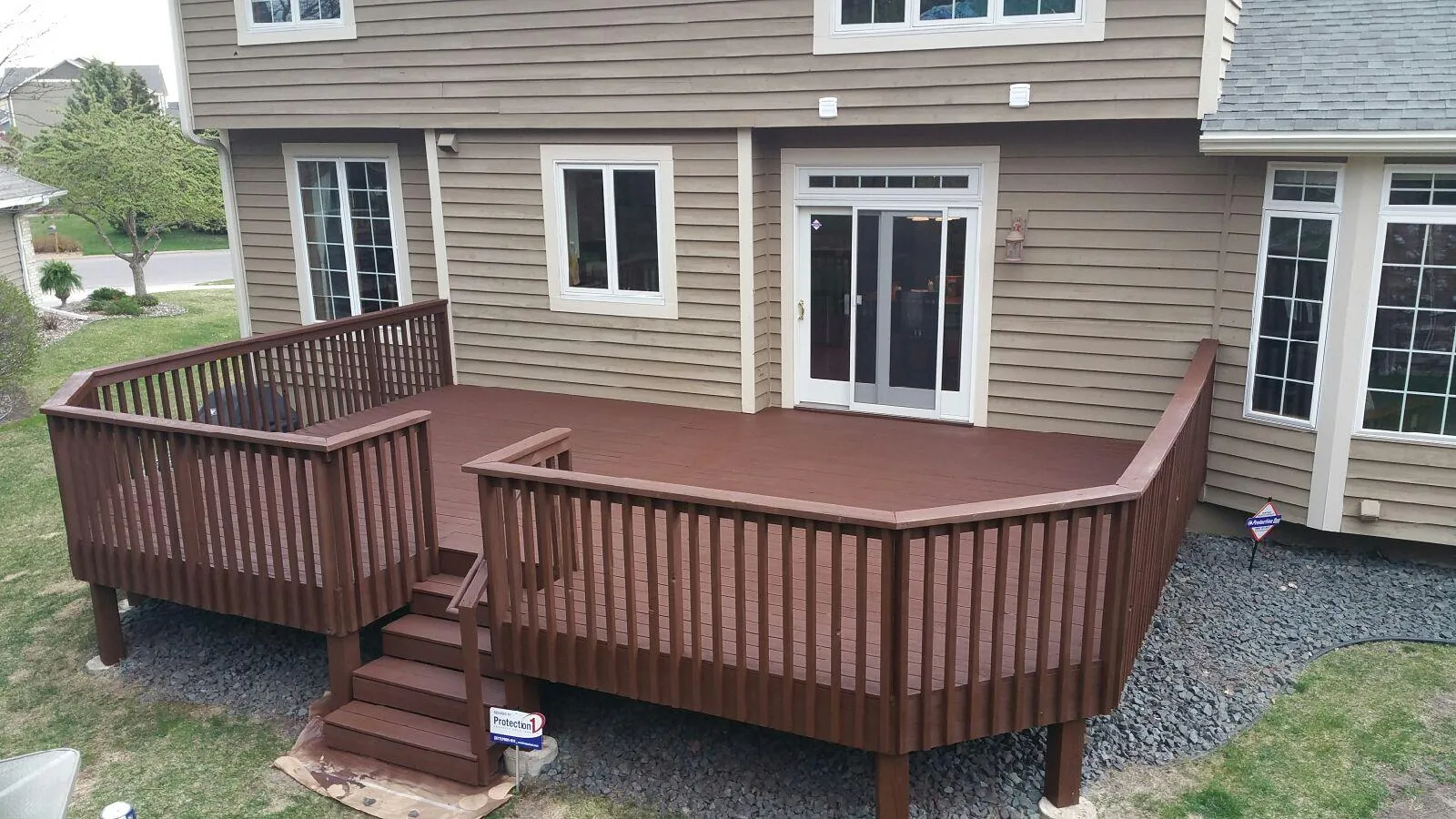
Deck repair in Eden Prairie usually starts in spring, when the snow melts off and shows what the winter did: boards cupped from months under snow, railing posts loosened by frost, and stairs that moved because their footings sat too shallow. We start by checking the structure under the surface, the ledger, joists, posts and footings, then quote either targeted repairs or a rebuild and explain the reason for each. Call (952) 563-8484 for an estimate, backed by our one-year written workmanship guarantee.
Minnesota's residential code calls for deck footings below the frost line, 42 inches deep in the southern half of the state, because frozen soil heaves anything set shallower. A lot of decks on the walkout lots around Purgatory Creek, Staring Lake and Bryant Lake were built with their stairs sitting on pads at grade, which is why those stairs pull away from the deck a little more every year. Most of the homes in Eden Prairie went up between the 1970s and the early 2000s, so many of their original decks are now 20 to 40 years old, past the point where a coat of stain is enough.
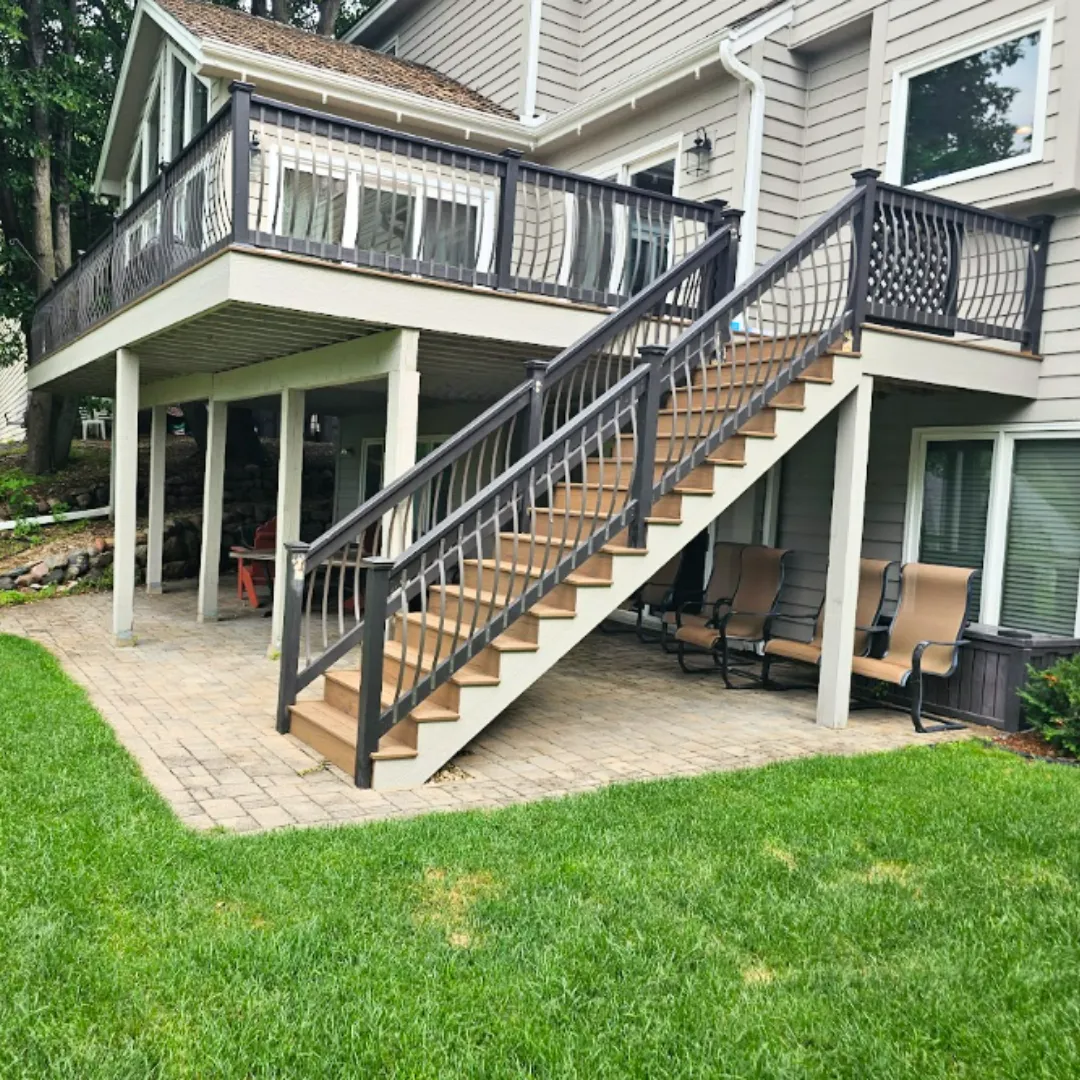
We repair, rebuild and build new decks in cedar, pressure-treated lumber and composite across Eden Prairie and the southwest metro, from small ground-level decks to second-story decks over a walkout with long stair runs.
Before you call
Signs your deck needs attention
Soft or spongy boards
Press a screwdriver into the boards near the house and around the stairs. If it sinks in easily, the wood has started to rot. One or two soft boards can be replaced; soft boards everywhere usually mean the framing underneath is wet too.
A railing that moves
Push on the railing posts. Any give is a safety problem, because railings are what stop a fall from a second-story deck. Loose posts are often a sign that the bolts or the rim joist behind them have deteriorated.
Stairs pulling away
A gap opening between the top step and the deck, or stairs that tilt, almost always means the stair footing is above the frost line and the ground is lifting it each winter.
Rust and stains at the house
Rust streaks or dark stains on the siding below the deck point to water getting behind the ledger board, where the deck attaches to the house. That connection carries half the deck's weight.
Cupped, split or popped boards
Boards that curl at the edges, split along the grain or lift their fasteners have been through too many wet and frozen cycles. They are a trip hazard and they hold water against the joists below.
Posts sitting on the ground
Posts set directly on the soil or on a thin pad, rather than on a footing, wick up moisture and move with the frost. You can often see the bottom of the post darkening or splitting.
Repair or rebuild: we show you the structure first
How it works
How a deck project runs
- 01
Call or request an estimate
Tell us what you are seeing and send a few photos of the deck, the stairs and the area underneath. Call (952) 563-8484 or use the estimate form.
- 02
On-site look at the structure
We check the boards, railings, stairs, joists, ledger, posts and footings, take measurements, and talk through what you want the deck to do for you.
- 03
A written estimate
You get a written estimate that separates required structural repairs from optional upgrades, such as new railings or composite boards, so you can decide what to do now and what can wait.
- 04
Permits and scheduling
When the work needs a building permit from your city, it is part of the plan before work starts. We schedule the job and give you an expected timeline.
- 05
The work, and the guarantee
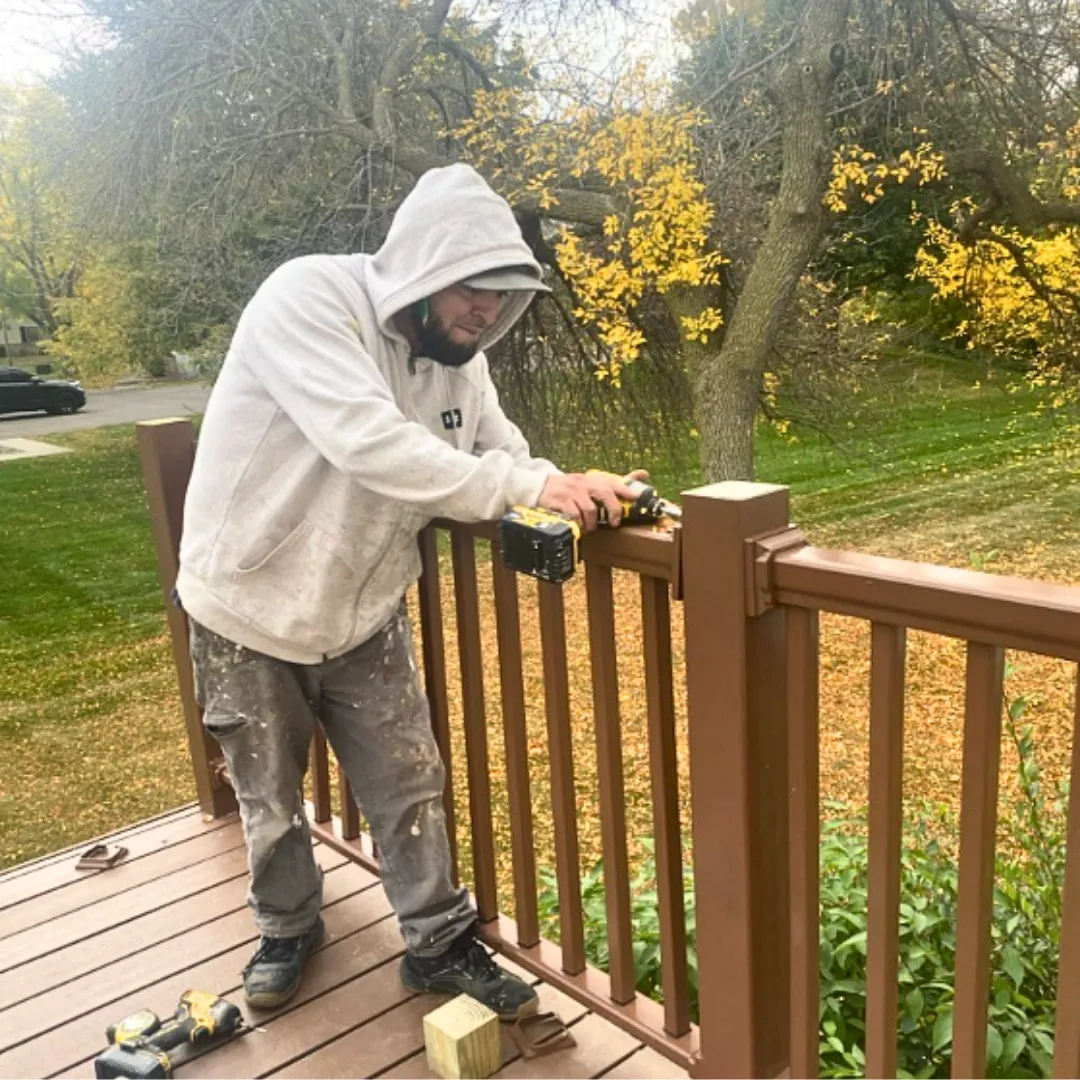
A background-checked craftsman does the work and cleans up. When the job is done, the workmanship is guaranteed in writing for one year from the invoice date.
Materials
Cedar, pressure-treated or composite
Pressure-treated lumber
The most common framing material and the lowest-cost decking. It holds up well when it is kept sealed, but it checks and splits as it dries, and it needs staining every few years to stay looking good. Nearly every deck, whatever the boards are made of, is framed with treated lumber.
Cedar
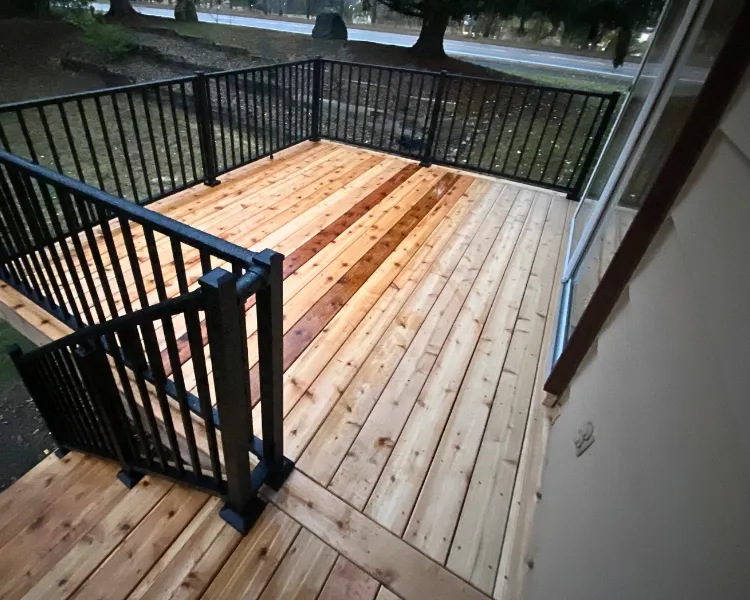
Naturally resistant to rot and insects, lighter in weight and better looking than treated boards, with a warm color that weathers to silver if it is left unstained. It costs more than treated lumber and still needs regular cleaning and stain in our climate.
Composite decking
Costs the most up front but does not rot, splinter or need staining, and it handles months under snow without cupping. It is a strong choice for shaded decks under trees, where wood stays damp, and for owners who do not want a staining job every few years. Composite boards can often be installed on existing framing that is still sound.
Cost
What affects the cost of deck work
Repair versus rebuild
Replacing boards and railings on good framing costs a fraction of a rebuild. The condition of the structure underneath is the biggest single factor.
Size and height
Larger decks need more material, and second-story decks over a walkout need taller posts, larger footings and more stair, all of which add labor.
Decking and railing materials
Treated lumber is the least expensive, then cedar, then composite. Aluminum and metal baluster railings cost more than wood but stop needing paint.
Stairs and footings
Rebuilding stairs on footings below the frost line takes digging and concrete, and long stair runs on sloped lots take more of both.
Access and permits
Tight yards, steep grades and the permit requirements in your city all affect the schedule and the labor involved.
Permits for deck work
Decks we have repaired and built
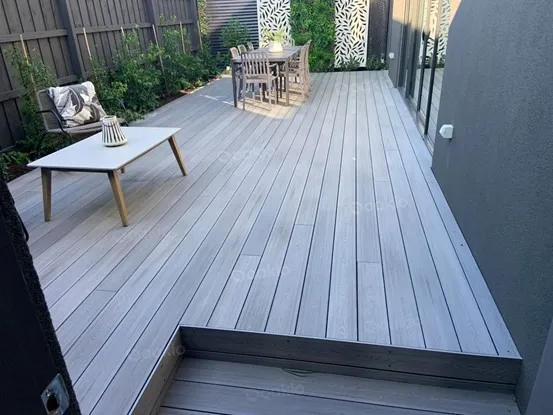
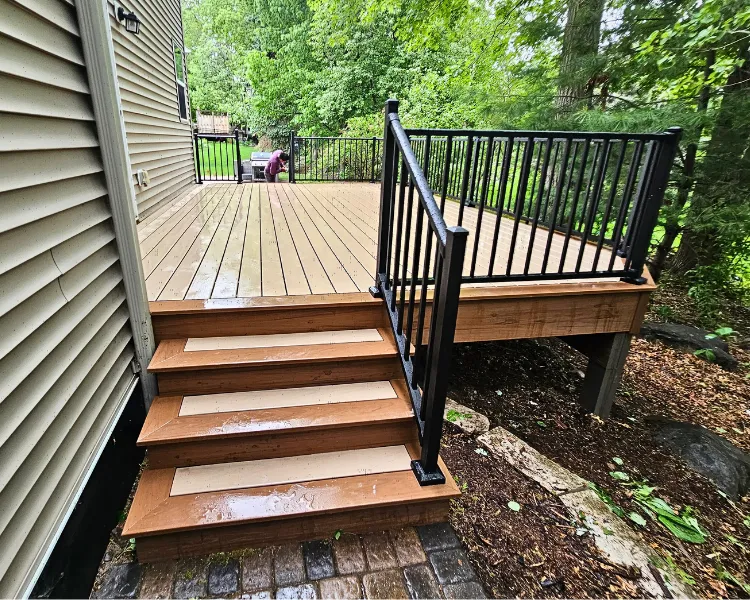
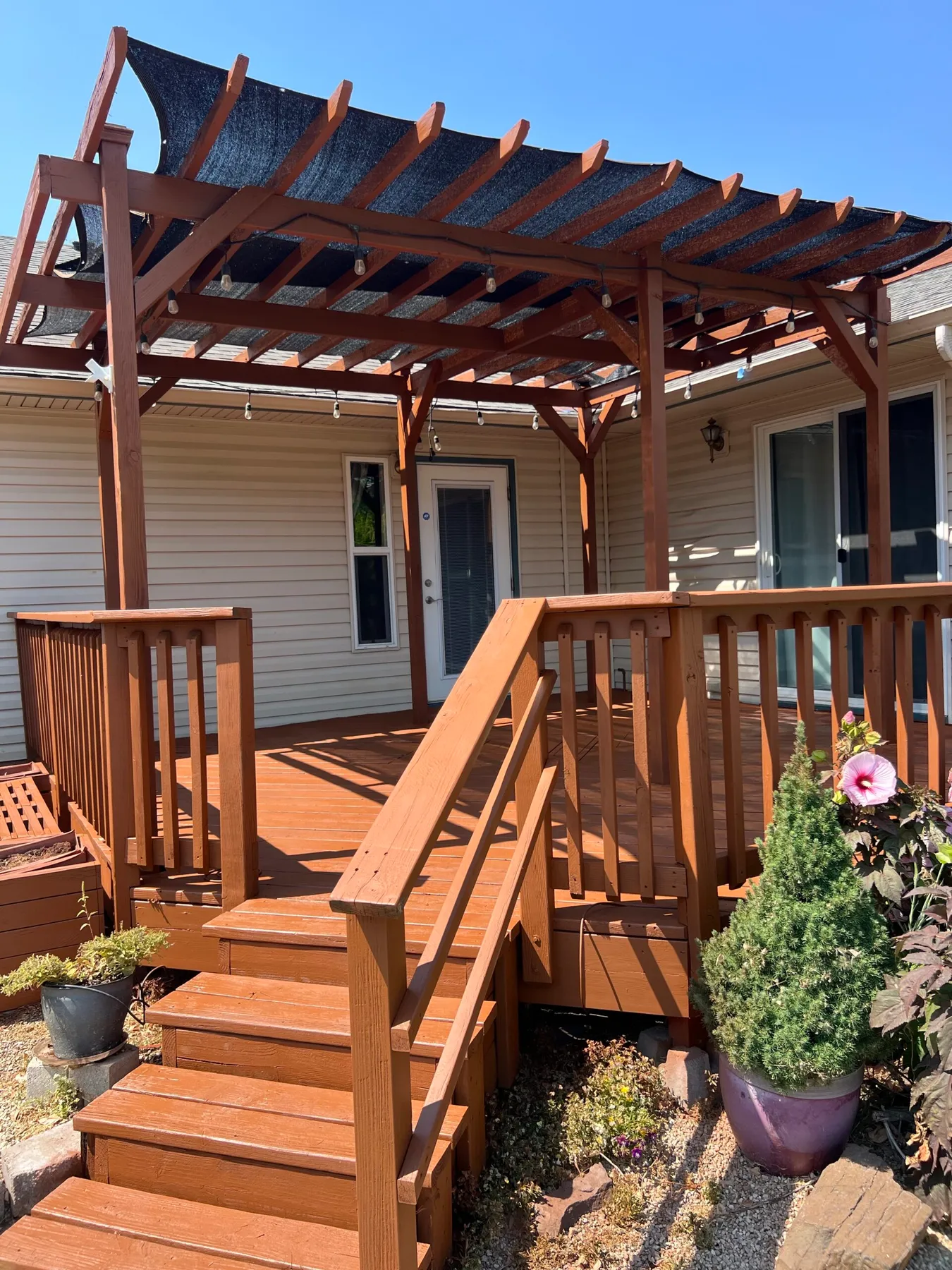
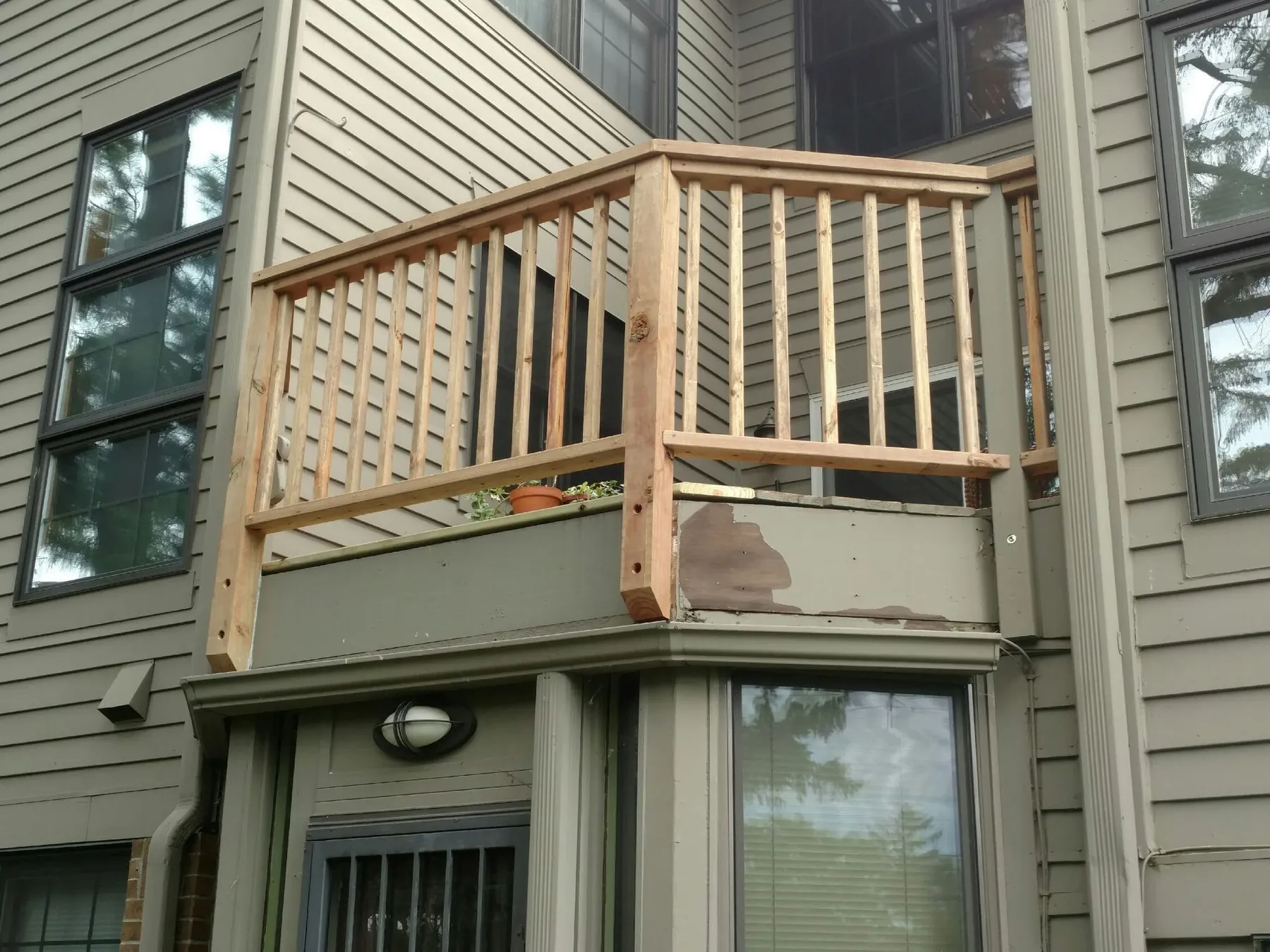
Deck repair across the southwest metro
We repair and build decks in Eden Prairie and every town in our service area.
Start here
Get your deck ready for summer
Spring and early summer book up first. Call (952) 563-8484 to get on the schedule.
(952) 563-8484Monday: 8:00 AM to 5:00 PM · Tuesday: 8:00 AM to 5:00 PM · Wednesday: 8:00 AM to 5:00 PM · Thursday: 8:00 AM to 5:00 PM · Friday: 8:00 AM to 5:00 PM · Saturday: 9:00 AM to 3:00 PM · Sunday: Closed
Or send it in writing
Three fields, thirty seconds
Straight from Google